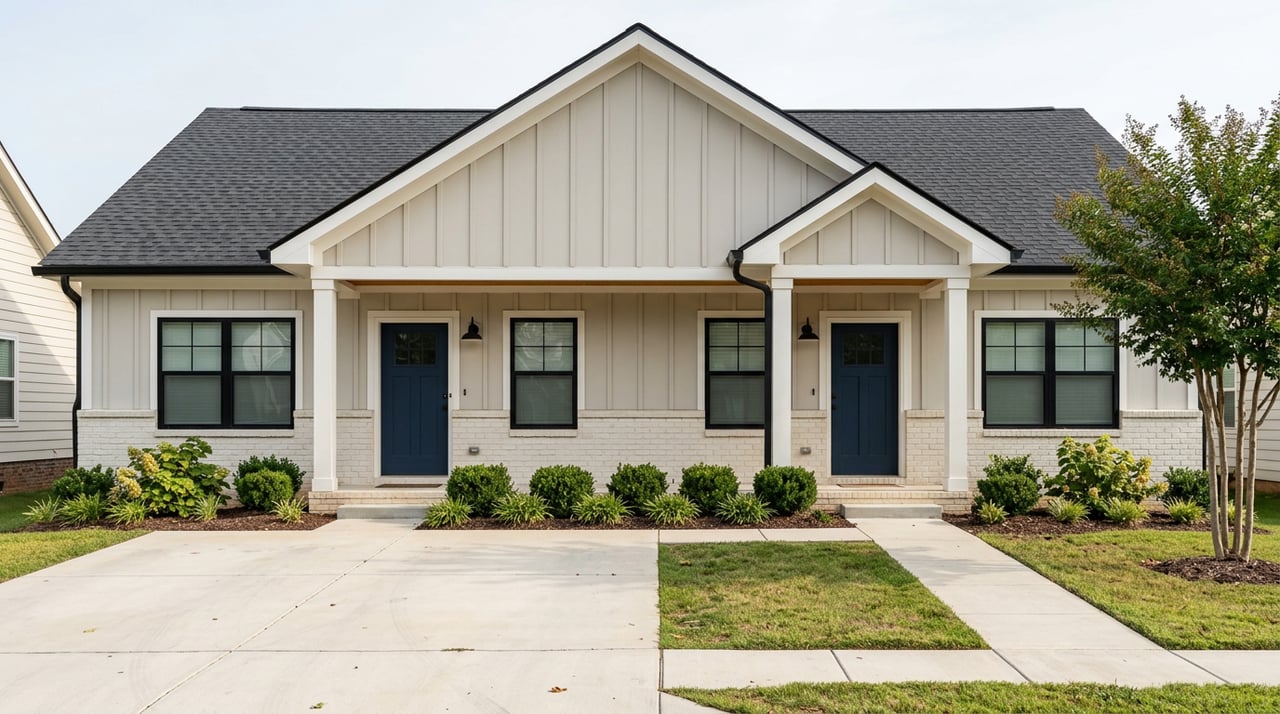
Is Durham still a smart buy-and-hold in 2026? If you are weighing cash flow against long-term growth, you are not alone. Prices have cooled from pandemic highs, rents have softened in large new buildings, and financing costs sit higher than a few years ago. In this guide, you will see what the data says about prices, rents, vacancy, and taxes, plus how to underwrite realistic returns and where to focus. Let’s dive in.
The quick answer
Durham remains a fundamentally sound long-term buy-and-hold market thanks to its employer base, universities, and steady population growth. Near term, performance is mixed. Typical home values are down modestly from the peak, average rents are roughly flat, and a wave of new apartment deliveries has pushed up vacancy in certain submarkets. If you underwrite for slower rent growth, elevated vacancy, and current rates, you can still find solid opportunities, especially in single-family rentals and small multifamily in areas with limited new luxury supply.
Prices and pace: what the market says
Recent price snapshots show a modest year-over-year decline in Durham’s median pricing compared with the 2021–2022 peaks. Typical home values have hovered around the upper $380s to low $390s by early 2026. Days to pending and for-sale inventory are above the pandemic lows, which points to a more balanced market. That is good news if you are buying for the long run and want time to evaluate an asset instead of racing into a bidding war.
The key question for a hold investor is not whether prices are rising this month. It is whether the rent you can achieve supports today’s purchase price and expenses. The underwriting section below walks through simple math you can run in minutes before you book a showing.
Rents, vacancy, and new supply
Average rent levels vary by data source because each vendor tracks a different set of properties. Using one dataset for consistency, RentCafe reports Durham’s average rent at about $1,540 as of February 2026. You will see different numbers from other services because they sample different buildings, but try to keep your apples-to-apples comparisons within a single vendor. RentCafe’s Durham rent summary is a good baseline if you want monthly updates.
On the supply side, new apartment deliveries since 2023 have been significant. CoStar-based market notes summarized by a local brokerage reported multifamily vacancy rising into the low double digits, roughly 12.1 percent in parts of 2025, especially in Downtown and South Durham, with year-over-year rent softness in newly delivered, high-amenity buildings. See the summary in this Q2 2025 market newsletter.
The pipeline continues, including projects like Crescent Communities’ NOVEL UHill in Durham, a 400-unit development slated to deliver in 2026. That is a reminder to stress test your rent and lease-up assumptions if you are targeting newer product. You can read more about that project in Multi-Housing News’ coverage.
Investor takeaway: new luxury apartments are facing the most near-term pressure. Older single-family rentals and small multifamily in established neighborhoods have seen steadier demand and fewer direct comps from the latest wave of high-amenity buildings.
Why long-term demand stays solid
Durham’s long-run housing demand is anchored by economic diversity and education. The area’s labor market has posted steady job gains with low unemployment through 2025, according to BLS metro releases. Major employers include Duke University and Duke Health, clinical research firms, and the broader Research Triangle Park ecosystem. Those sectors support year-round rental demand from students, medical and research staff, and early-career professionals.
Population trends also underpin demand. Durham County’s headcount has grown over time, which supports both renter and homeowner markets. For a quick demographic view, check Census QuickFacts for Durham County.
Property types and areas to prioritize
Some locations and asset types are more resilient than others right now. Here is a practical framework to help you focus.
Defensive SFR and small multifamily: Look for established single-family neighborhoods and older infill areas where there is limited new luxury development nearby. In recent quarters, older non-luxury stock generally showed less rent softness than the newest high-amenity properties in the city core. This is a good fit if you want steadier occupancy and manageable turns.
Caution in Downtown and South Durham: These submarkets absorbed a large share of recent deliveries. Expect higher vacancy, more concessions, and longer stabilization timelines for brand-new 4 and 5-star buildings. If you buy here, model conservative lease-up, and do not skip concessions in your pro forma.
University-adjacent rentals: Properties near Duke or North Carolina Central can deliver consistent demand, but plan for higher turnover and some seasonality. Due diligence should include campus housing plans and your plan for summer leasing.
RTP-adjacent workforce rentals: South Durham and RTP-proximate areas draw renters in tech and life sciences. Employer moves can shift demand at the margins, so keep an eye on recent employer footprint adjustments and pipeline projects across the Triangle.
Build-to-rent context: Purpose-built single-family rental communities are an active product type statewide and across the Sun Belt. A recent Point2Homes/Yardi report on the build-to-rent pipeline highlights ongoing activity in North Carolina. For you, this means SFR demand remains healthy, but in micro-markets with multiple new BTR communities, you should monitor comps and concessions closely.
Underwrite with today’s math
Before you write an offer, run these simple checks. Use recent comps, realistic rents, and current expense data.
- Gross rent multiplier (GRM) = Purchase price / Annual gross rent.
- Gross yield = Annual gross rent / Purchase price.
- Cap rate = Net operating income / Purchase price, where NOI = Gross rent minus operating expenses. Exclude mortgage payments.
Example using city-level medians so you can replicate:
- Illustrative price: $390,600 (typical value snapshot for Durham).
- Illustrative rent: $1,626 per month for a 2-bedroom based on the RentCafe city average, which equals $19,512 per year. Source: RentCafe Durham rent trends.
- GRM = 390,600 divided by 19,512 ≈ 20.
- Gross yield ≈ 5.0 percent.
- If you assume a 50 percent operating expense ratio, NOI ≈ $9,756 and the cap rate ≈ 2.5 percent.
- If you assume a 35 percent expense ratio, NOI ≈ $12,683 and the cap rate ≈ 3.25 percent.
What it means: at typical prices and average rents, unlevered cap rates are low. To hit return targets, you either need to buy below median pricing, find value-add opportunities that increase NOI, or hold longer for appreciation. Conservative investors should also stress test the next 6 to 12 months of vacancy and use current rate assumptions.
Two items can swing your returns:
Property taxes after reappraisal: Durham County completed a 2025 general reappraisal. The county rate is about 55.42 cents per $100 of assessed value, with a separate City of Durham rate for in-city parcels. Model the higher assessed value and tax bill in your pro forma and consider an appeal if warranted. Learn more on the Durham County 2025 reappraisal page.
Financing costs: The 30-year fixed-rate average has hovered near 6 percent in early 2026, based on the Freddie Mac Primary Mortgage Market Survey. Small changes in interest rate or a few months of higher vacancy can flip a marginal deal, so model 100 to 200 basis points of rate movement and longer lease-up as a downside case.
Durham vs. nearby Triangle markets
Average rents in the Triangle vary by city. Using a single dataset for consistency, RentCafe reports Durham’s average rent around $1,540, which is in line with Raleigh and below Chapel Hill. This gap matters when you compare yield against purchase price and property taxes by submarket. For city-level comparisons and trendlines, see RentCafe’s regional rent summaries.
Regionally, the multifamily market has been normalizing after several quarters of softness as new supply is absorbed. For a high-level view of how 2023–2025 deliveries are working through the system, see REBusinessOnline’s coverage of Raleigh–Durham’s normalization.
Practical next steps for investors
- Define your buy box by property type and neighborhood profile. Target SFR and small multifamily in established areas with limited new luxury competition.
- Pull comps for the last 90 to 180 days and current asking rents for your exact property type.
- Build a conservative pro forma with realistic vacancy, property taxes after reappraisal, and today’s financing terms.
- Stress test downside scenarios: 6 to 12 months of elevated vacancy, flat rents, and a higher interest rate.
- Plan your leasing and management approach early, including a strategy for renewal increases and turn timelines.
If you want a second set of eyes on your underwriting or help sourcing off-market and on-market options, connect with Ed Karazin. Ed’s team blends neighborhood-level comps with investor-ready leasing guidance so you can buy with confidence.
FAQs
Is Durham still attractive for single-family rentals in 2026?
- Yes, especially in established neighborhoods with limited new luxury supply, where demand has been steadier and vacancy pressure lower than in newly delivered downtown apartments.
How do new apartment deliveries affect small landlords?
- The wave of high-amenity deliveries has raised vacancy and concessions in Downtown and South Durham, but older SFRs and small multifamily have generally seen more stable occupancy and rent trends.
What should I know about Durham’s 2025 property reappraisal?
- The county completed a general reappraisal for 2025 and set a rate around 55.42 cents per $100 of assessed value; model a higher tax bill and review the appeal process if needed.
What mortgage rate should I use when modeling cash flow?
- Use the current Freddie Mac PMMS 30-year fixed average, which has been near 6 percent in early 2026, and stress test plus or minus 100 to 200 basis points.
Are rents in Durham competitive with Raleigh and Chapel Hill?
- Using RentCafe for consistency, Durham’s average rent is roughly in line with Raleigh and below Chapel Hill, which can improve yield potential relative to purchase price in certain neighborhoods.