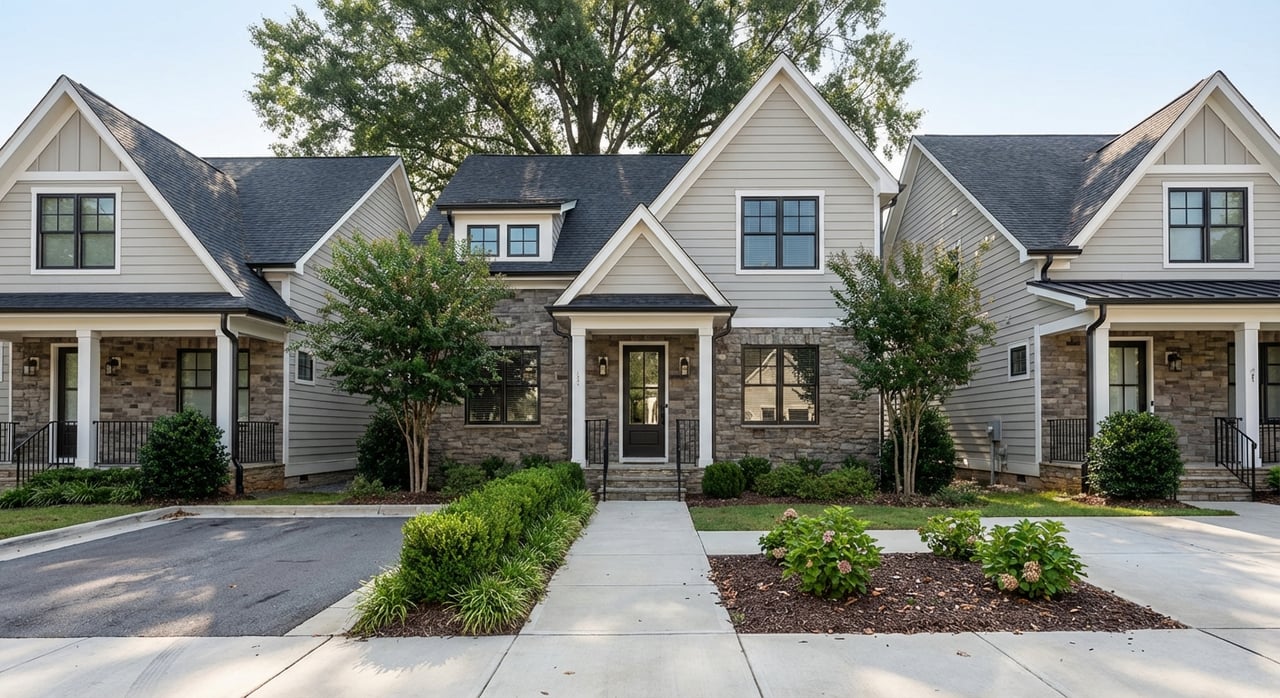
Buying your first place in Raleigh can feel exciting and a little overwhelming. You want a smart payment, a convenient location, and confidence that you are not missing fine print about HOAs or financing. This guide breaks down what first-time buyers need to know about townhomes and condos in Raleigh and Wake County, from price ranges and HOA dues to loan rules and neighborhoods to watch. Let’s dive in.
Why attached homes fit first-time buyers
Townhomes and condos often give you a lower entry price than a detached single-family home. You typically take on less exterior maintenance, which saves time and money. Many communities place you closer to work, parks, dining, and major roads, which can shorten commutes.
There are tradeoffs. You will budget for monthly HOA dues, follow association rules, and plan for the risk of special assessments. Financing can be different for condos because lenders review the building’s financials, insurance, and occupancy. Knowing how these pieces work helps you buy confidently.
What entry-level looks like in Raleigh and Wake
Prices vary by neighborhood, unit size, age, and amenities. As a general guide, many smaller and older condos trade roughly in the $150,000 to $300,000 range in parts of Raleigh. Resale townhomes and newer townhome communities often start around the low-to-mid $200,000s and run through the mid $300,000s, with some new builds in popular corridors reaching the upper $300,000s.
If you want the lowest entry prices, you may widen your search beyond the core city. Close-in suburbs offer newer townhome options and different tradeoffs on commute time, space, and HOA dues. Plan your search around both price and time-to-downtown or RTP so the total “cost” fits your life.
Condo vs townhome: what you actually own
The biggest difference is ownership structure and what it means for maintenance.
- Condominiums: You typically own the interior of your unit and share ownership of common areas through the association. The association often handles exterior maintenance. Lenders and insurers treat condos differently because the building’s finances and rules matter.
- Townhomes: Many are fee-simple, which means you own the unit and the land under it. Some townhomes are legally part of a condo regime. Always confirm the legal structure in the recorded documents since that affects insurance, maintenance responsibilities, and loan options.
Your purchase contract should include the association documents so you can confirm what is covered and what you are responsible for.
HOA dues: how much and what they cover
HOA and condo dues vary widely. Federal consumer guidance notes that dues can range from a few hundred dollars to more than $1,000 per month depending on amenities and building type. In the Raleigh area, many mid-market condo buildings run roughly from the mid $100s to the $500s per month, while many suburban townhome HOAs are often lower. Always verify current dues with the seller and association since they can change. You can review high-level guidance on how HOA dues factor into your budget from the Consumer Financial Protection Bureau in its overview of HOA and condo fees in monthly payments.
Dues often cover exterior maintenance, landscaping, common-area insurance, amenities, and management. Strong reserves help cover roof, elevator, or exterior projects without large special assessments. Ask for the current budget and reserve details before you commit.
Insurance basics: HO-6 vs HO-3
Most condo buyers purchase an HO-6 “walls-in” policy that covers interior finishes, personal property, liability, and often loss-assessment coverage. The condo association carries a master policy for the structure and common areas. What the master policy covers can vary, so you should have your agent and insurer review it. Bankrate’s guide to condo insurance and what HO-6 covers is a helpful primer.
If your townhome is fee-simple and you own the exterior and lot, your policy may look more like a standard HO-3 policy. Always confirm coverage with your insurer based on the legal structure and the association’s master policy.
North Carolina disclosures and your buyer rights
North Carolina gives condo buyers access to information that protects you from surprises. The North Carolina Condominium Act requires public offering statements for new condos, including budget and reserve details, and sets rules for the information you are entitled to receive. You can review the statute that governs condo disclosures at the NC General Assembly site.
For resale transactions, sellers must provide the state Residential Property and Owners’ Association Disclosure Statement when applicable. Timing matters for your rescission rights and due diligence. The North Carolina Real Estate Commission publishes the rules related to brokerage and disclosures. Work with your agent to track what is due and when.
Financing: what to confirm early
Condos add project-level underwriting checks that can affect your loan approval and rate. Start these steps early to avoid surprises.
FHA loans and condo approvals
FHA maintains a list of approved condo projects. It also allows a Single-Unit Approval in some cases, even when a building is not fully approved. Both paths have rules and documentation requirements, and an approval is not automatic. Confirm a specific building’s status and your options using HUD’s resources on FHA condo project approval and SUA and by speaking with your lender.
VA loans and condo acceptance
VA generally requires the condo project itself to be accepted for a VA loan. Veterans should search the VA database or work with a VA lender early. This guide explains how to find a VA-accepted condo.
Conventional loans and “warrantable” condos
Fannie Mae and Freddie Mac set standards for condo projects. Lenders look at owner-occupancy, HOA delinquency rates, reserves, litigation, and commercial space. If a project is non-warrantable, you may face higher down payments or a portfolio loan. That can also affect resale and refinance options. See this plain-language overview of what makes a condo warrantable.
Down payment help in North Carolina
First-time buyers often layer down payment assistance with FHA, VA, or low-down-payment conventional loans. The North Carolina Housing Finance Agency runs the NC Home Advantage Mortgage and related programs that can reduce cash to close for eligible buyers. Explore current options on the NCHFA website, and confirm with your lender which programs they offer.
Neighborhoods and areas to watch
Attached homes are available across Raleigh and nearby suburbs. Your best fit depends on budget, commute, HOA tolerance, and the vibe you want.
- Downtown, Glenwood South, North Hills: Mix of condos and urban townhomes with higher walkability and amenity access. Expect higher HOA dues in some elevator buildings. For an overview of popular Raleigh areas, see WRAL’s guide to Raleigh neighborhoods.
- Five Points, Cameron Village, Mordecai, Oakwood: Older condos and rowhome options near downtown that can offer smaller footprints and character.
- North Raleigh and Northeast Raleigh: Active townhome construction with a range of price points, including many options in the low-to-mid price bands.
- Suburbs to compare: Cary, Apex, Morrisville, Wake Forest, Holly Springs, Garner, Knightdale. You will find newer townhome communities, different amenity packages, and tradeoffs between space and commute time.
As you compare areas, line up price, HOA dues, taxes, and time-to-work. Your monthly budget and your weekly schedule both matter.
Build a monthly budget that includes HOAs
HOA and condo dues count toward your monthly housing cost and your debt-to-income ratio. Make sure your lender includes dues in pre-approval, and that you plan for any fees that are billed quarterly or annually. The CFPB’s overview of how HOA dues factor into monthly payments is a helpful reminder.
A simple rule of thumb is to model three versions of your budget: expected dues, a 10 percent dues increase, and a “stress test” that assumes a modest special assessment spread over 12 months. This helps you choose a community that still feels right if costs rise.
Due diligence checklist before you remove contingencies
Use this list with your agent and lender. Ask for documents early, read them closely, and keep notes.
- HOA resale certificate and current budget. Review reserve balances and recent budgets and meeting minutes. The North Carolina Condominium Act outlines what must be disclosed in condo offering statements.
- Master insurance and deductibles. Share the master policy with your insurer and confirm recommended HO-6 coverage. See Bankrate’s guide to condo insurance basics.
- Special assessments and capital projects. Ask about any assessments in the past five years and whether roof, elevator, siding, or parking projects are planned.
- Owner-occupancy and rental caps. These percentages can affect your financing now and your resale pool later. Review this overview of warrantable vs non-warrantable criteria.
- Pending or recent litigation. Ask the HOA for details and review meeting minutes for attorney updates.
- FHA, VA, and conforming status. Have your lender check whether the project is FHA- or VA-approved and whether it meets GSE standards. Learn about FHA condo approvals and SUA and the VA’s acceptance process for condos via the VA resource.
- North Carolina disclosures timing. Track delivery of the Residential Property and Owners’ Association Disclosure Statement and any condo documents that affect rescission rights. See the NC Real Estate Commission’s rules and guidance.
- Full monthly budget. Include principal and interest, taxes, homeowner or HO-6 insurance, HOA dues, and utilities. Revisit the CFPB’s note on HOA dues in monthly payments.
How to move forward with confidence
First-time buyers do very well with attached homes in Raleigh and Wake County when they match the right community to the right loan and budget. You will feel confident if you confirm the building’s financial health, align HOA rules with your goals, and start financing checks early.
If you want a clear plan, local pricing context, and calm help through the HOA and lending details, reach out to Ed Karazin. Ed’s team brings neighborhood-level knowledge across Raleigh, Cary, and Apex, plus hands-on investor experience with student and rental condos. You will get responsive guidance and a step-by-step path to your first closing.
FAQs
What price range should first-time buyers expect for Raleigh condos and townhomes?
- Many smaller or older condos can list around $150,000 to $300,000 in parts of Raleigh, while many townhomes often run from the low-to-mid $200,000s through the mid $300,000s, with some new builds higher depending on location and finishes.
Are HOA dues included in my mortgage payment for a Raleigh condo or townhome?
- Most lenders collect HOA dues separately from your mortgage escrow, so you pay them directly to the association; the CFPB explains how HOA dues factor into monthly payments.
How does FHA financing work for Raleigh condos?
- FHA requires that the condo project be approved or that your unit qualify for a Single-Unit Approval; you and your lender should confirm status through HUD’s page on FHA condo approvals and SUA.
What is the difference between HO-6 and HO-3 insurance for first-time buyers?
- Condo owners generally buy HO-6 “walls-in” coverage to pair with the building’s master policy, while fee-simple townhome owners often use HO-3 policies; review Bankrate’s condo insurance overview.
What condo documents can I request in North Carolina before I close?
- Ask for the resale certificate, current budget, reserves, master insurance details, meeting minutes, and any litigation disclosures; North Carolina’s Condo Act outlines required disclosures in offering statements.
Which Raleigh areas have more entry-level attached options for first-timers?
- You will commonly find entry-level options in parts of North and Northeast Raleigh and in nearby suburbs like Garner or Knightdale, with downtown and Glenwood South offering walkable condos that may carry higher HOA dues; see WRAL’s overview of Raleigh neighborhoods.